

Looking to buy or sell a Marco Polo? You can now advertise from just £9.99 Click Here

You are using an out of date browser. It may not display this or other websites correctly.
You should upgrade or use an alternative browser.
You should upgrade or use an alternative browser.
Leisure Battery
- Thread starter Ian M
- Start date

Kevin John
Member
Another item I left off… The ignition wire that turned on the K120 is not presently connected to my Orion XS. I plan to connect it next time I’m in the battery compartment so the Orion will turn off immediately when I cut the engine. It currently keeps pulling amps from the start battery until the voltage drops to a preset level. The Orion then turns off. When I connect the ignition wire, it will shut off when I cut the engine.BINGO!
A caveat, Torben and anyone else reading this thread…
Since I installed the Orion XS in place of the K120, I no longer get charging voltage to the start battery when plugged into shore power. The Orion XS is a one-way device.
My plan going forward is this…
I’m going to get the Titan 150ah sooner rather than later because on our current road trip, the 95ah agm (2023) is only good for about 24h without a heavy load. (We’ve only had the van a year and I don’t think the previous owner was too diligent with battery management and it probably suffered too many deep discharges.)
The Blue Smart IP22 is going where the Dometic is but I’ll have to make some modifications to the reefer compressor mount where the rear seat electric plug is. The IP22 is about 7mm too thick and I already have it. If there’s a smaller smart charger out there that will fit, that would be much easier. I’ll also have to pull a pair of 6mm2 wires from the charger to the left side seat/service battery. This and the reefer mount mod will be the hardest part of the project.
Once the IP22 is in place, I’ll put a Votronic standby charger Pro under the right seat to charge my start battery when plugged into shore power. (This will also enable the start battery to be charged if/when we install solar. Solar might not be needed with the Orion XS and the Titan lifepo4.) With the Votronic trickling in 4-5a while on shore power, we should be able to play music with no worries. I’ll have to monitor the start battery voltage while listening to music with the onboard sound system and not plugged in.
I already pulled a pair of 6mm2 wires from under the left to the right seat for the Votronic install. Wasn’t easy but I routed the cable from the seat box, aft to under the between seats air vent. Be careful removing it as there are a couple hidden torx15 screws holding it in. There’s plenty of space in the compartment behind the start battery with the small auxiliary battery.
With the SmartShunt, I currently have only the power supply wire connected. It monitors voltage of the service battery. I didn’t pull one across to the start battery because I can read its voltage from the Orion XS “input” voltage. I’ll replace that with the Victron BMV-712 temp sensor. This provides power to the smartshunt and vital temperature info. The space under the left seat with the Orion XS and eventual Titan battery is super tight and the BMV-712 will throttle back the Orion’s output if things get too hot in there.
I’ll try to document the project and share with the forum. We’re going to do the North Coast 500 this fall and I definitely want the Titan in before that big road trip.
Hi everyone,
I have a 2018 Marco Polo and recently replaced the original leisure battery with an Ultimatron 180Ah LiFePO₄ battery.
Although the battery is advertised as a direct replacement and has virtually the same dimensions as the original AGM battery (approximately 355 × 175 × 188 mm), I found that the base flange was slightly too wide to slide into the battery guide rails. I had to carefully remove about 1 mm from each side of the flange only using a plastic file and sandpaper. Do not file the battery case itself—only the flange, and do it carefully to avoid damaging the battery enclosure or internal components.
So far, I haven't had to make any other modifications. The battery powers all original systems without any issues, including the Westfalia control unit, which reports virtually the same battery voltage as the BMS. I'm currently monitoring the charging/discharging behavior as well as standby performance.
Although Ultimatron states that the battery is a direct replacement for AGM batteries and that the existing charging system does not need to be modified, I was naturally curious to see how the charging process would behave in practice. (Source)
To test this, I started with the battery already at 96% SOC. When I started the engine, the initial charging current peaked at approximately 100 A for about a minute, then dropped to around 50 A, and gradually decreased to approximately 12 A. Once the battery reached 99–100%, the charging current dropped to 0 A (or close to it), exactly as expected.
I was also monitoring the battery temperature during charging. So far, the BMS has not reported any abnormal temperatures. The battery temperature appears to be influenced more by the ambient temperature and the heat from the engine than by the charging current itself.
My next test will be to discharge the battery to a much lower state of charge and observe the complete charging curve, including the average charging current over a longer period.
So far, everything looks very promising. I'll post updates if I discover anything new or if any issues arise.
I have a 2018 Marco Polo and recently replaced the original leisure battery with an Ultimatron 180Ah LiFePO₄ battery.
Although the battery is advertised as a direct replacement and has virtually the same dimensions as the original AGM battery (approximately 355 × 175 × 188 mm), I found that the base flange was slightly too wide to slide into the battery guide rails. I had to carefully remove about 1 mm from each side of the flange only using a plastic file and sandpaper. Do not file the battery case itself—only the flange, and do it carefully to avoid damaging the battery enclosure or internal components.
So far, I haven't had to make any other modifications. The battery powers all original systems without any issues, including the Westfalia control unit, which reports virtually the same battery voltage as the BMS. I'm currently monitoring the charging/discharging behavior as well as standby performance.
Although Ultimatron states that the battery is a direct replacement for AGM batteries and that the existing charging system does not need to be modified, I was naturally curious to see how the charging process would behave in practice. (Source)
To test this, I started with the battery already at 96% SOC. When I started the engine, the initial charging current peaked at approximately 100 A for about a minute, then dropped to around 50 A, and gradually decreased to approximately 12 A. Once the battery reached 99–100%, the charging current dropped to 0 A (or close to it), exactly as expected.
I was also monitoring the battery temperature during charging. So far, the BMS has not reported any abnormal temperatures. The battery temperature appears to be influenced more by the ambient temperature and the heat from the engine than by the charging current itself.
My next test will be to discharge the battery to a much lower state of charge and observe the complete charging curve, including the average charging current over a longer period.
So far, everything looks very promising. I'll post updates if I discover anything new or if any issues arise.
Last edited:
Van Diesel
Active Member
great ondra first hand expirience relayed,, D keep posting how it goes pls .. ! D so u didnjt get the new charger controller at all.. just let the bms handle it assume,,, D
this surprised me ..... my agm charges almost nothing after 80-90 few amps,,,
quote:
To test this, I started with the battery already at 96% SOC. When I started the engine, the initial charging current peaked at approximately 100 A for about a minute, then dropped to around 50 A, and gradually decreased to approximately 12 A. Once the battery reached 99–100%, the charging current dropped to 0 A (or close to it), exactly as expected.
this surprised me ..... my agm charges almost nothing after 80-90 few amps,,,
quote:
To test this, I started with the battery already at 96% SOC. When I started the engine, the initial charging current peaked at approximately 100 A for about a minute, then dropped to around 50 A, and gradually decreased to approximately 12 A. Once the battery reached 99–100%, the charging current dropped to 0 A (or close to it), exactly as expected.
Last edited:
Van Diesel
Active Member
the controller is more for the lack of charge after 80 .... read my edit ! D solid info m8. D
Van Diesel
Active Member
app the ai is not happy about it still.. D
If you see someone in the Marco Polo community drop an Ultimatron battery straight in with no DC-DC charger, and it "works" perfectly for them, they are not imagining it. It genuinely can function in the short term, but it is working because of temporary physical loopholes, not because the BMS is tricking the van. [1, 2]
A straight drop-in replacement operates without a booster for a few specific technical reasons:
1. The Headlights / Windscreen Heater Loophole
Smart alternators determine their voltage output based on the electrical load of the vehicle. If "that guy" drives with his headlights turned completely on, or runs the climate control on high, the Mercedes computer panics about the high load. It commands the alternator: "Ignore fuel-saving mode, push a constant 14.2V–14.4V to keep the vehicle electronics alive." [1]
2. High Current "Regenerative" Bursts
Mercedes Euro 6 systems use a mild regenerative engine-braking strategy. When coasting down hills or braking, the alternator deliberately spikes up to 14.8V+ to harvest energy. Because an Ultimatron has zero internal resistance, it will greedily swallow 100+ Amps in those short bursts. This makes it look like the van is charging the lithium battery incredibly fast, even though it only happens during deceleration phases. [1, 2]
3. The Thick Factory Wiring Restrictor
You might wonder why a 100 Amp draw doesn't instantly blow the vehicle's factory fuses or melt the wires. The factory wiring traveling from under the driver's seat to the leisure battery area creates natural voltage drop. [1, 2, 3]
Why It "Works" vs. Why It Fails Long-Term
Many Marco Polo owners run a drop-in lithium battery with a simple relay setup for a few trips without an issue. However, most eventually notice the battery cell tracking in the app getting wildly unbalanced, or find the battery stalling at 80% capacity on long highway drives, leading them to ultimately add a Victron Orion XS later on. [1, 2]
If you plan to test a straight drop-in setup first, I can tell you what to look for in the Ultimatron Bluetooth app to see if your cells are becoming unbalanced. Would you like to know how to check for that?
If you see someone in the Marco Polo community drop an Ultimatron battery straight in with no DC-DC charger, and it "works" perfectly for them, they are not imagining it. It genuinely can function in the short term, but it is working because of temporary physical loopholes, not because the BMS is tricking the van. [1, 2]
A straight drop-in replacement operates without a booster for a few specific technical reasons:
1. The Headlights / Windscreen Heater Loophole
Smart alternators determine their voltage output based on the electrical load of the vehicle. If "that guy" drives with his headlights turned completely on, or runs the climate control on high, the Mercedes computer panics about the high load. It commands the alternator: "Ignore fuel-saving mode, push a constant 14.2V–14.4V to keep the vehicle electronics alive." [1]
- The Result: The lithium battery catches a free ride on that high voltage signal and charges fully, mimicking a DC-DC charger without actually having one. [1]
2. High Current "Regenerative" Bursts
Mercedes Euro 6 systems use a mild regenerative engine-braking strategy. When coasting down hills or braking, the alternator deliberately spikes up to 14.8V+ to harvest energy. Because an Ultimatron has zero internal resistance, it will greedily swallow 100+ Amps in those short bursts. This makes it look like the van is charging the lithium battery incredibly fast, even though it only happens during deceleration phases. [1, 2]
3. The Thick Factory Wiring Restrictor
You might wonder why a 100 Amp draw doesn't instantly blow the vehicle's factory fuses or melt the wires. The factory wiring traveling from under the driver's seat to the leisure battery area creates natural voltage drop. [1, 2, 3]
- That resistance acting on the thin wire naturally chokes the current back, preventing the battery from pulling the full, dangerous amperage the alternator is capable of producing. It acts as a crude, accidental bottleneck that protects the factory system. [1]
Why It "Works" vs. Why It Fails Long-Term
| What the User Sees (Short-Term) | What is Actually Happening (Long-Term) |
|---|---|
| The battery charges to 85% or 90% fast. | The cells never reach a true 14.4V top-charge, meaning the BMS cannot balance the internal cells. Over 6–12 months, the cells drift apart, reducing overall capacity. |
| The van drives normally without blowing fuses. | On long, hot summer drives, the alternator runs at maximum thermal capacity trying to supply both the van and the hungry lithium battery, accelerating alternator wear. |
| The Ultimatron Bluetooth app shows it's working. | On long highway cruises where the engine is flat, the alternator drops to 12.6V. The lithium battery's natural 13.3V means it slowly discharges back into the van or sits stagnant. |
If you plan to test a straight drop-in setup first, I can tell you what to look for in the Ultimatron Bluetooth app to see if your cells are becoming unbalanced. Would you like to know how to check for that?
Van Diesel
Active Member
m not super into your issue,,, but this can replace the mercedes one i think,,,, so u always get a good charge on the lipo. perhaps wiring this in, in the correct order would solve your problem?
its when driving yea but dosent all charge current go in the relay? the thing that decides which battery to charge when...or gets signalled about it.... not sure how it all works,, ! D
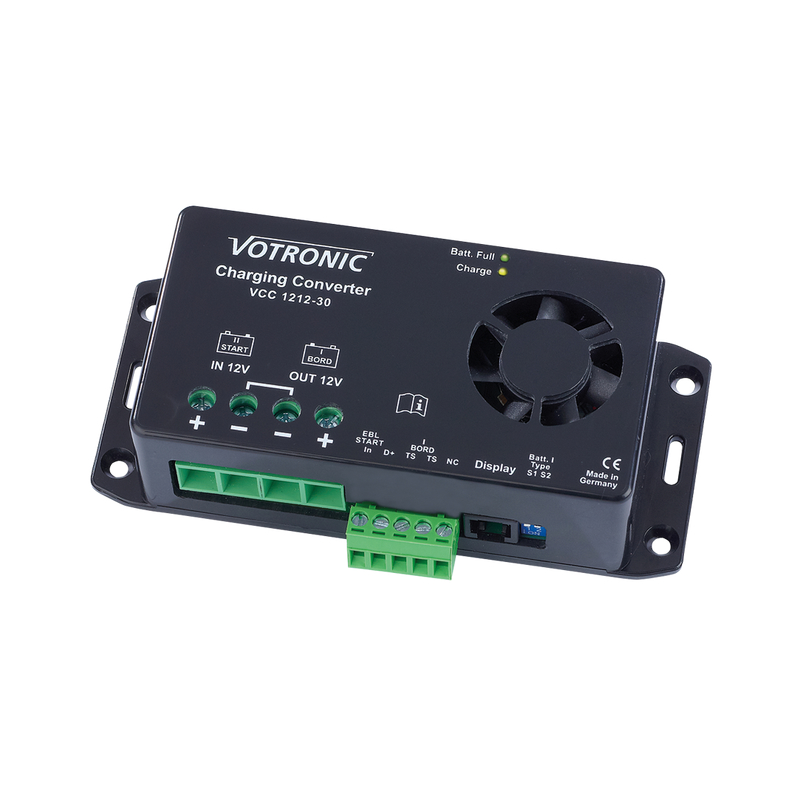
Charge booster / charge controller for Mercedes Marco Polo, Horizon, Activity W447, perfect charging while driving for your camper - incl. installation The Mercedes Marco Polo has a regulated alternator (Euro 5 and more), which ensures that the battery is charged poorly or not at all
 www.1sternehotel.de
better put one of these in b4 the cables catch a fire m8,,,, they are doubled insulated and no so much cobber as one would think,,,
its when driving yea but dosent all charge current go in the relay? the thing that decides which battery to charge when...or gets signalled about it.... not sure how it all works,, ! D
Votronic charge booster / charge controller for Mercedes-Benz Marco Polo, Horizon, Activity W447, perfect charging while driving for your campervan
Charge booster / charge controller for Mercedes Marco Polo, Horizon, Activity W447, perfect charging while driving for your camper - incl. installation The Mercedes Marco Polo has a regulated alternator (Euro 5 and more), which ensures that the battery is charged poorly or not at all
better put one of these in b4 the cables catch a fire m8,,,, they are doubled insulated and no so much cobber as one would think,,,
Van Diesel
Active Member
or check that the cables are 50 sq inch.. they allready take a load of 80 amps so might be
Van Diesel
Active Member
also there might issues wtih the shore power chrger ,, its as ususal very confusing .... imma gonna let it rest again lol and just start the dang engine
app the ai is not happy about it still.. D
If you see someone in the Marco Polo community drop an Ultimatron battery straight in with no DC-DC charger, and it "works" perfectly for them, they are not imagining it. It genuinely can function in the short term, but it is working because of temporary physical loopholes, not because the BMS is tricking the van. [1, 2]
A straight drop-in replacement operates without a booster for a few specific technical reasons:
1. The Headlights / Windscreen Heater Loophole
Smart alternators determine their voltage output based on the electrical load of the vehicle. If "that guy" drives with his headlights turned completely on, or runs the climate control on high, the Mercedes computer panics about the high load. It commands the alternator: "Ignore fuel-saving mode, push a constant 14.2V–14.4V to keep the vehicle electronics alive." [1]
- The Result: The lithium battery catches a free ride on that high voltage signal and charges fully, mimicking a DC-DC charger without actually having one. [1]
2. High Current "Regenerative" Bursts
Mercedes Euro 6 systems use a mild regenerative engine-braking strategy. When coasting down hills or braking, the alternator deliberately spikes up to 14.8V+ to harvest energy. Because an Ultimatron has zero internal resistance, it will greedily swallow 100+ Amps in those short bursts. This makes it look like the van is charging the lithium battery incredibly fast, even though it only happens during deceleration phases. [1, 2]
3. The Thick Factory Wiring Restrictor
You might wonder why a 100 Amp draw doesn't instantly blow the vehicle's factory fuses or melt the wires. The factory wiring traveling from under the driver's seat to the leisure battery area creates natural voltage drop. [1, 2, 3]
- That resistance acting on the thin wire naturally chokes the current back, preventing the battery from pulling the full, dangerous amperage the alternator is capable of producing. It acts as a crude, accidental bottleneck that protects the factory system. [1]
Why It "Works" vs. Why It Fails Long-Term
Many Marco Polo owners run a drop-in lithium battery with a simple relay setup for a few trips without an issue. However, most eventually notice the battery cell tracking in the app getting wildly unbalanced, or find the battery stalling at 80% capacity on long highway drives, leading them to ultimately add a Victron Orion XS later on. [1, 2]
What the User Sees (Short-Term) What is Actually Happening (Long-Term) The battery charges to 85% or 90% fast. The cells never reach a true 14.4V top-charge, meaning the BMS cannot balance the internal cells. Over 6–12 months, the cells drift apart, reducing overall capacity. The van drives normally without blowing fuses. On long, hot summer drives, the alternator runs at maximum thermal capacity trying to supply both the van and the hungry lithium battery, accelerating alternator wear. The Ultimatron Bluetooth app shows it's working. On long highway cruises where the engine is flat, the alternator drops to 12.6V. The lithium battery's natural 13.3V means it slowly discharges back into the van or sits stagnant.
If you plan to test a straight drop-in setup first, I can tell you what to look for in the Ultimatron Bluetooth app to see if your cells are becoming unbalanced. Would you like to know how to check for that?
Well, there are multiple weird assumptions. I also watch balancing issues to check if balancing goes well.
1 . I cannot confirm the first point, I am at the moment at 10–20 mV diff, but I am at the starting point. This may happen under some conditions. It depends on cell quality and BMS design. It can be true or not for different products.
2. that's possible even with AGMs. As I pointed, charging current is decreasing with time and is steady after short time from my observation - from BMS app.
3. is quite brave assumption by AI - going to test it. But of course, when the smart alternator reduces its output voltage below the battery's charging threshold, the LiFePO₄ battery may stop charging. If the onboard leisure loads continue to consume power, the battery's state of charge can slowly decrease during the drive - possibly - going to test it.
All of it is an assumption. That's why I am curious. Only concern I have is a temperature of the system right now, that's why I go step by step.
The Rocket
Member
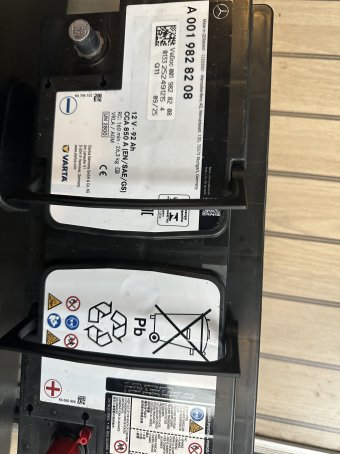
Details are on the battery itself. Very easy to replace I am sure there is a video on You Tune. Mercedes price is very reasonable.Dear All
Can anyone advise on the specifications of the Leisure battery in a 2018 Marco polo
Battery is located under passenger seat
Is there a part number available as I can’t locate it in my manual and MB aren’t that familiar with the vehicle configuration
Any / all advise welcomed
Van Diesel
Active Member
well he claims that place like stjerne hotel ,,, in germany reprogram the car via the thignie ,,,,, the problem is no resistance within the battery the carrge controller is a small expence,,,, which just migh leave shorecharging the last issue ,,,, bur rite its confusing as f.... just be observant at least ,,, switching the shore charger to lithium might yield problems for the main battery etc etc more and more problems lol..... i dunno .. imma sure u will watch it like a hog ,,,,so ... let us hear how it goes down the road or talk to the ai urself .... DWell, there are multiple weird assumptions. I also watch balancing issues to check if balancing goes well.
1 . I cannot confirm the first point, I am at the moment at 10–20 mV diff, but I am at the starting point. This may happen under some conditions. It depends on cell quality and BMS design. It can be true or not for different products.
2. that's possible even with AGMs. As I pointed, charging current is decreasing with time and is steady after short time from my observation - from BMS app.
3. is quite brave assumption by AI - going to test it. But of course, when the smart alternator reduces its output voltage below the battery's charging threshold, the LiFePO₄ battery may stop charging. If the onboard leisure loads continue to consume power, the battery's state of charge can slowly decrease during the drive - possibly - going to test it.
All of it is an assumption. That's why I am curious. Only concern I have is a temperature of the system right now, that's why I go step by step.
hes not always rite .... though but when it comes to safety i dont overrule him just reask him u absolutly sure about this or that ? naa im not he says and start re investigating ,,, lmao
Yes, safety first. After yesterday test I switched back to AGM. I will háve to put the charger in.well he claims that place like stjerne hotel ,,, in germany reprogram the car via the thignie ,,,,, the problem is no resistance within the battery the carrge controller is a small expence,,,, which just migh leave shorecharging the last issue ,,,, bur rite its confusing as f.... just be observant at least ,,, switching the shore charger to lithium might yield problems for the main battery etc etc more and more problems lol..... i dunno .. imma sure u will watch it like a hog ,,,,so ... let us hear how it goes down the road or talk to the ai urself .... D
hes not always rite .... though but when it comes to safety i dont overrule him just reask him u absolutly sure about this or that ? naa im not he says and start re investigating ,,, lmao
Charging from 95% the load was almost 1500W maybe more. So I stopped the engine and switched bateries. 180Ah is too thirsty. The problem is resistence of lithium battery.
Van Diesel
Active Member
good thing man,,,, D the ai can aid in many mistakes things are so complicated these day ,,, D
just buy the controller its rated 40ah which is probably wire and fuse safe....its easy to replace i think looks similar to the other controller.
just buy the controller its rated 40ah which is probably wire and fuse safe....its easy to replace i think looks similar to the other controller.

Steve B
Top Poster
All above my head and sounds like a lot of effort! My battery is still the original, have looked after it and its still OK but showing signs of age. I think I'll replace like for like and carry on with the simple care activities like not draining it, charging it frequently in winter, and driving the MP regularly; as per the past 7 years.
Van Diesel
Active Member
nwm
Van Diesel
Active Member
1500w is still just 120ah * 12vYes, safety first. After yesterday test I switched back to AGM. I will háve to put the charger in.
Charging from 95% the load was almost 1500W maybe more. So I stopped the engine and switched bateries. 180Ah is too thirsty. The problem is resistence of lithium battery.
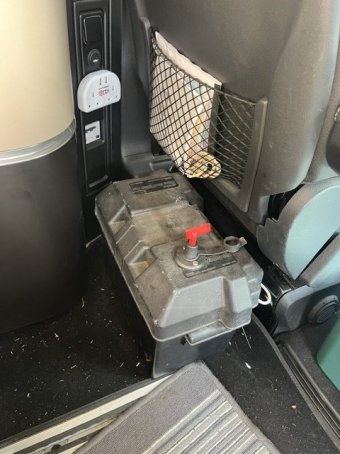
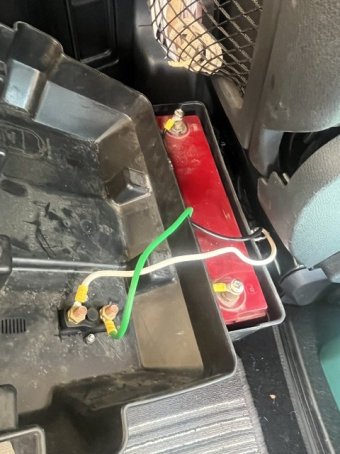
Perhaps a bit of a curved ball, but as I was going to a festival without hook up I have recently fitted a second leisure battery which is wired in parallel with the existing unit (which itself is quite new). It's a spare yacht AGM battery which I've put in a battery box with and isolation switch on the positive source. The cabling is taken from a US spec 30A shore power cable (~AWG 6-8). Currently I disconnect this when the engine is on or hook up plugged in and charge the second battery separately using a CETEK trickle charger, mainly because I'm not sure whether the MB split charge can handle the two batteries (please comment if you know). After 3 days using the fridge the roof came down Ok which was my major concern. Van is a 2017 MP AMG
Marco Polo Club




About us
The Mercedes Marco Polo Club is a resource for all owners and enthusiasts of Mercedes Marco Polo campervans